District Reports Encouraging Results from Sterile Male Mosquito Program
Nearly one million non-biting male mosquitoes released as part of an effort to reduce invasive mosquitoes and protect public health
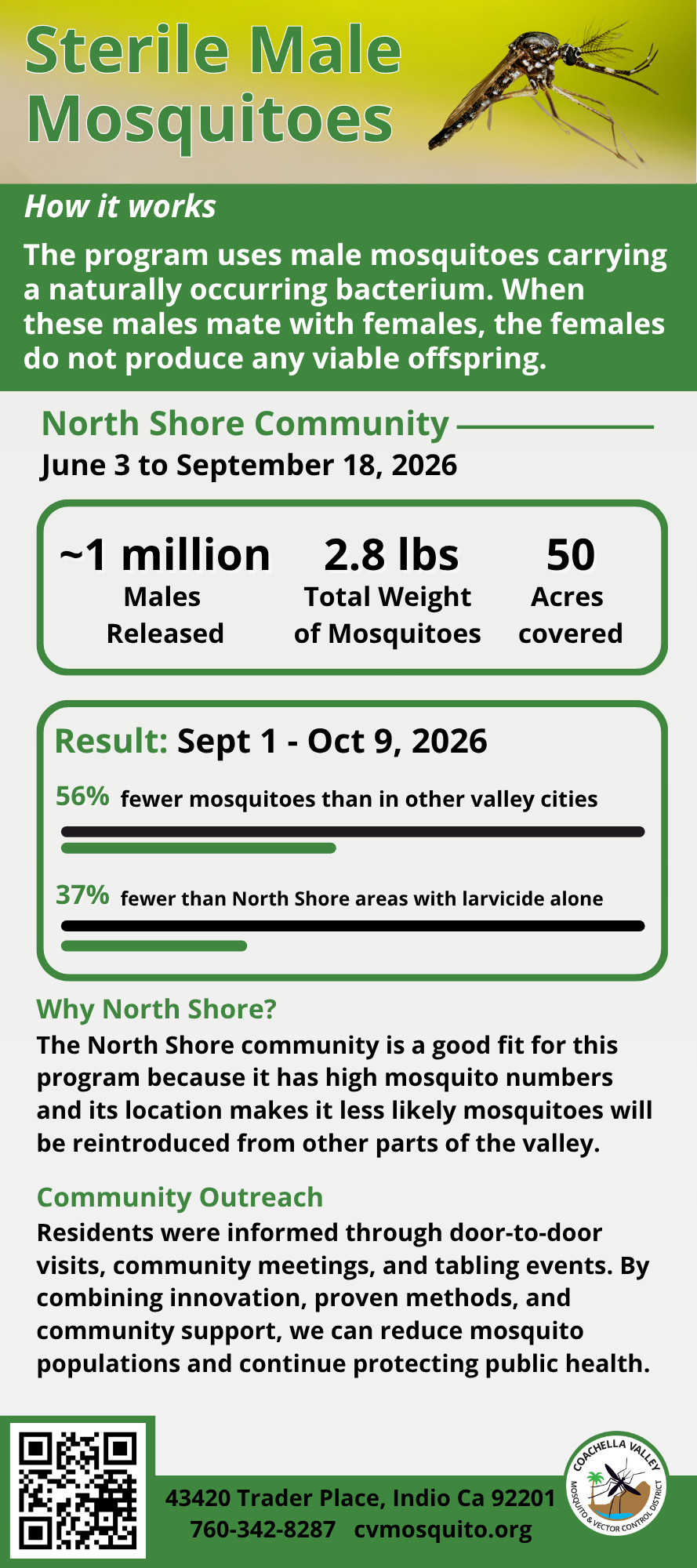
Coachella Valley, CA: The Coachella Valley Mosquito and Vector Control District reports encouraging results from its first sterile male mosquito release program in the North Shore community, where nearly one million male mosquitoes were released this summer to help reduce Aedes aegypti, an invasive mosquito that can spread dengue, chikungunya, and Zika viruses.
From June 3 through September 18, the District released 959,400 male mosquitoes across 50 acres in North Shore. The program used MosquitoMate Wb1, an EPA-registered product containing male mosquitoes that carry a naturally occurring bacterium and renders them sterile. Male mosquitoes do not bite or transmit mosquito-borne diseases. When these males mate with female Aedes aegypti, the females do not produce viable offspring, helping reduce future mosquito populations.
Encouraging Results: During the most recent six-week reporting period, average mosquito numbers in the North Shore release area were 56% lower than in other cities across the Coachella Valley and 37% lower than in a North Shore comparison area that received larvicide treatments alone.
“These results are encouraging and show the potential of combining innovative science with proven mosquito control methods,” said Jennifer Henke, Laboratory Manager for the District. “We will continue monitoring mosquito populations and evaluating this approach to determine how it can support our ongoing efforts to protect public health.”
Community Engagement Was Key to the Program: The District worked to keep residents informed before and throughout the release program. Outreach included community meetings, door-to-door visits, educational materials, and pop-up events in North Shore, Mecca, Thermal, and other East Valley communities.
North Shore was selected for the program because of its high mosquito numbers and its location, which makes it less likely that mosquitoes will be reintroduced from other parts of the Coachella Valley.
The findings will help inform future decisions about using this approach alongside established mosquito control methods.
“Protecting public health requires continued investment in science, effective mosquito control, and strong community partnerships,” said Henke. “By working together, we can continue exploring effective ways to reduce mosquito populations and help protect our communities from mosquito-borne diseases.”
Residents can help reduce mosquito populations by eliminating standing water around their homes and businesses, maintaining swimming pools, and reporting potential mosquito sources to the District. Residents are also encouraged to use EPA-registered insect repellent when outdoors and follow label directions.
For more information about the sterile male mosquito program, mosquito prevention, or to report a mosquito problem, contact the Coachella Valley Mosquito and Vector Control District at 760-342-8287 or visit www.cvmosquito.org.