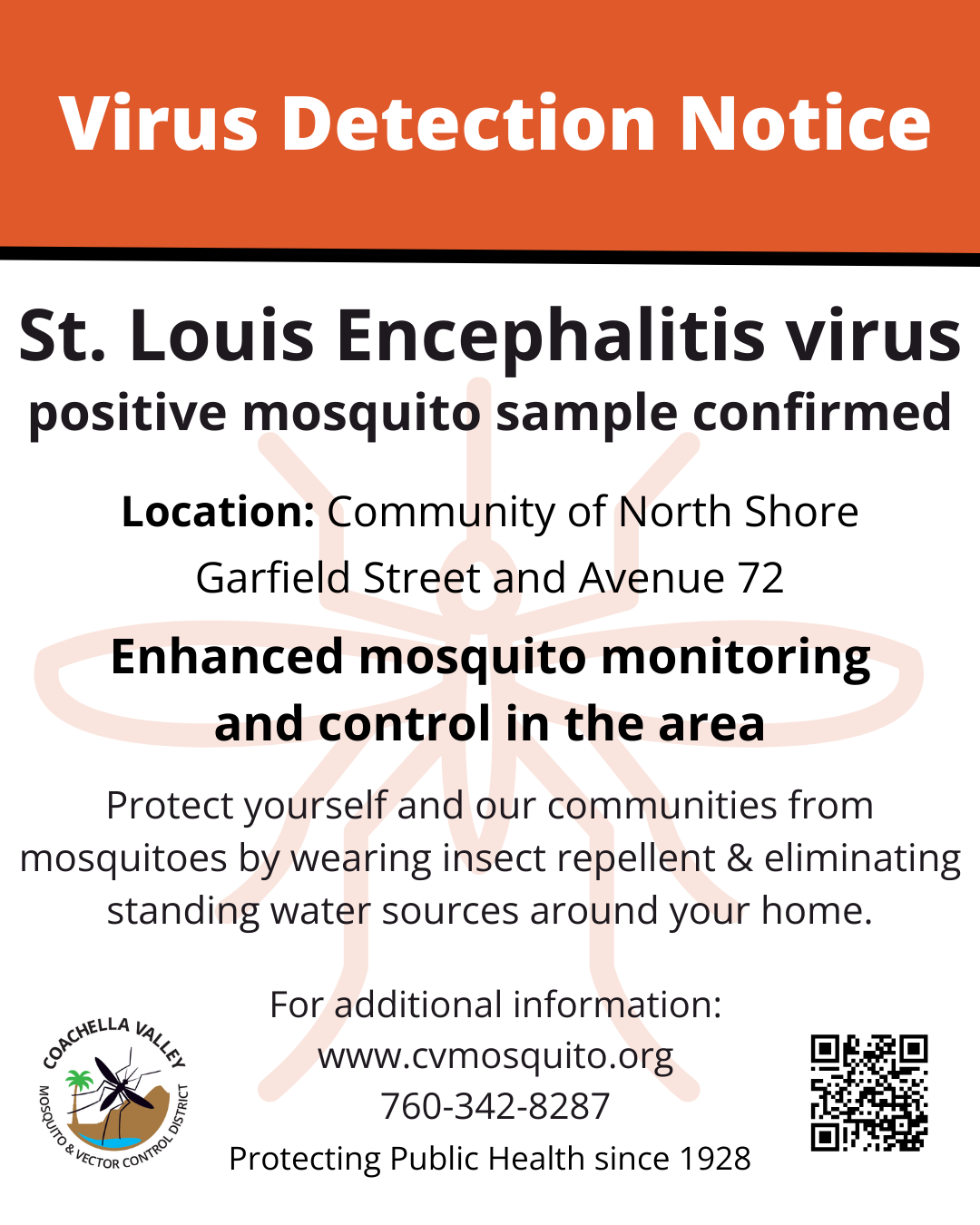
First Mosquito-Borne Virus Sample of the Season Detected in North Shore
District Urges Residents to Dump and Drain Standing Water Following Recent Rains
Coachella Valley, CA — The Coachella Valley Mosquito and Vector Control District has confirmed the first mosquito-borne virus detection of the year after mosquitoes collected from a routine surveillance trap in North Shore tested positive for St. Louis Encephalitis virus (SLEV). The sample was collected near Avenue 72 and Garfield Street.
“This detection serves as an early reminder that mosquito-borne viruses are present in our region each year,” said District General Manager Jeremy Wittie. “With recent rainfall and rising temperatures, mosquito populations can increase quickly. We urge residents to take immediate action by dumping and draining any standing water around their homes on a weekly basis.”
No human cases of SLEV have been reported in the Coachella Valley or elsewhere in California this year. There is currently no human vaccine for SLEV. Prevention depends on reducing mosquito populations and avoiding mosquito bites.
In response to this detection, the District is increasing mosquito monitoring and deploying additional mosquito control technicians to the area. Targeted treatments will be conducted as necessary to reduce mosquito numbers and interrupt potential virus transmission.
Understanding the Mosquito Species
The mosquitoes that commonly transmit St. Louis Encephalitis virus in our region are Culex tarsalis. These mosquitoes typically lay their eggs in standing water such as neglected swimming pools, agricultural runoff, wetlands, storm drains, and other stagnant sources. They are most active during the evening and early morning hours.
This is different from the invasive Aedes aegypti mosquito, which can transmit viruses such as dengue, Zika, and chikungunya. Aedes aegypti mosquitoes are aggressive daytime biters and are often found in small containers of water close to homes, including plant saucers and decorative items.
While both species require standing water to reproduce, they differ in behavior, habitat preference, and the viruses they are known to spread. Eliminating standing water remains the most effective strategy to reduce populations of both species and lower the risk of disease transmission.
What Residents Can Do
Dump and Drain After the Rain. Standing water provides ideal conditions for harboring mosquitoes, and even small amounts can produce hundreds of mosquitoes in less than a week. Following recent rains, residents should:
• Check yards and patios for standing water.
• Drain water from flowerpot saucers, buckets, toys, tarps, and any containers that collect water.
• Empty and scrub birdbaths and pet water bowls weekly.
• Clear debris from yard and lawn drains to prevent pooling.
• Ensure swimming pools, spas, ponds, and fountains are properly maintained and have working pumps.
Prevent Mosquito Bites
• Apply EPA-registered insect repellents containing DEET, picaridin, oil of lemon eucalyptus, or IR3535, according to label instructions.
• Wear long sleeves and pants when outdoors.
• Repair window and door screens to prevent mosquitoes from entering homes.
About St. Louis Encephalitis Virus
St. Louis Encephalitis virus is transmitted when a mosquito feeds on an infected bird and later bites a person. Most people infected with SLEV experience no symptoms. Some may develop fevers, headaches, nausea, or body aches. In more severe cases, the virus can affect the nervous system and require hospitalization. Individuals experiencing symptoms should contact their healthcare provider.
About Coachella Valley Mosquito and Vector Control District
Established in 1928, The Coachella Valley Mosquito and Vector Control District is a special district accountable to the residents of the Coachella Valley, California. Our primary charge is protecting public health within our boundaries through the control of vectors (such as mosquitoes) and vector-borne diseases. The District conducts year-round surveillance, disease monitoring, and targeted control operations using science-based and environmentally responsible practices. Residents can request service, report mosquito activity, or learn more about prevention by contacting the District directly or visiting cvmosquito.org.
02.17.2026 SLEV North Shore English 02.17.2026 SLEV North Shore Spanish.pdf